Pituitary Hormones and their Psychiatric Relevance: PL, LH, FSH

Über den Vortrag
Der Vortrag „Pituitary Hormones and their Psychiatric Relevance: PL, LH, FSH“ von Melissa Kalensky, FNP-BC, PMHNP-BC, CNE ist Bestandteil des Kurses „Hormonal and Genetic Influences in Psychopharmacology“.
Quiz zum Vortrag
Which statement best describes the regulation and clinical effects of prolactin?
- Prolactin is primarily inhibited by dopamine and elevated levels are associated with anxiety, hostility, somatization, and reduced fertility.
- Prolactin is primarily stimulated by dopamine and elevated levels are associated with euphoria, reduced anxiety, and improved fertility.
- Prolactin secretion is controlled exclusively by the physical suckling reflex and has no clear psychiatric or emotional associations.
- Prolactin is produced in the posterior pituitary and high levels primarily cause increased libido and improved reproductive function.
- Prolactin release is regulated exclusively by TRH and estrogen and is completely unrelated to the HPA axis or stress response mechanisms.
In psychiatric practice, which medication-related situation should prompt checking a prolactin level?
- A patient taking first-generation antipsychotics such as risperidone or haloperidol who reports gynecomastia or breast discharge.
- A patient taking second-generation antipsychotics such as aripiprazole or quetiapine who reports mild sedation or daytime drowsiness.
- A patient taking mood stabilizers such as lithium or valproate who reports hand tremor and moderate weight gain.
- A patient taking SSRIs such as sertraline or fluoxetine who reports transient nausea during the first week of treatment.
- A patient taking stimulants such as methylphenidate or amphetamine who reports decreased appetite and difficulty falling asleep.
Which of the following correctly differentiates the primary roles of luteinizing hormone (LH) between females and males?
- In females LH triggers ovulation and corpus luteum formation, while in males it stimulates Leydig cells to increase testosterone for spermatogenesis.
- In females LH exclusively maintains pregnancy by supporting the placenta, while in males it directly produces sperm without affecting testosterone levels.
- In females LH primarily promotes initial follicle maturation, while in males it controls prolactin release directly from the anterior pituitary.
- In females LH regulates milk production and lactation, while in males it primarily controls adrenal cortisol secretion and stress responses.
- In females LH suppresses ovulation to prevent pregnancy, while in males it decreases testosterone production to prevent excessive spermatogenesis.

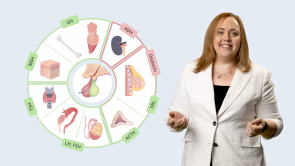
Dozent des Vortrages Pituitary Hormones and their Psychiatric Relevance: PL, LH, FSH

Melissa Kalensky, FNP-BC, PMHNP-BC, CNE
Dr. Melissa Kalensky, FNP-BC, PMHNP-BC, CNE is dual-certified as a Family Nurse Practitioner and a Psychiatric Mental Health Nurse Practitioner.
She specializes in primary care, community health, and integrated behavioral healthcare. Her expertise spans trauma-informed care and psychiatry across all age groups, from children to adults.
At Lecturio, she teaches psychopharmacology to advanced practice providers, helping to bridge the gap between psychiatric and primary care practice.
Kundenrezensionen
5,0 von 5 Sternen
| 5 Sterne |
|
5 |
| 4 Sterne |
|
0 |
| 3 Sterne |
|
0 |
| 2 Sterne |
|
0 |
| 1 Stern |
|
0 |


