Peripheral Hormones and their Psychiatric Relevance: Cortisol and Insulin

About the Lecture
The lecture Peripheral Hormones and their Psychiatric Relevance: Cortisol and Insulin by Melissa Kalensky, FNP-BC, PMHNP-BC, CNE is from the course Hormonal and Genetic Influences in Psychopharmacology.
Included Quiz Questions
Which of the following best describes a key concern related to elevated cortisol levels in psychopharmacology?
- They can manifest as increased anxiety or depression by weakening the hippocampus over time.
- They primarily cause acute psychosis by directly increasing dopamine synthesis in the striatum.
- They mainly lead to cognitive impairment through disruption of prefrontal cortex functioning.
- They frequently trigger manic episodes by excessively stimulating reward pathways in the brain.
- They commonly induce obsessive-compulsive symptoms through serotonergic pathway dysregulation.
In clinical practice, why is it important to monitor insulin levels in patients taking many atypical antipsychotics?
- Because these psychotropic drugs directly influence insulin action, requiring monitoring to prevent serious metabolic complications.
- Because these medications frequently induce rapid hypoglycemia through excessive pancreatic beta-cell stimulation.
- Because atypical antipsychotics commonly trigger autoimmune destruction of insulin-producing pancreatic cells.
- Because these drugs routinely cause acute ketoacidosis by blocking hepatic glucose production pathways.
- Because antipsychotics typically induce severe hyperthyroidism that secondarily disrupts glucose metabolism.

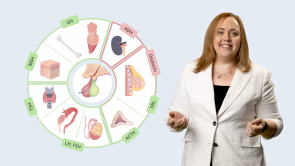
Author of lecture Peripheral Hormones and their Psychiatric Relevance: Cortisol and Insulin

Melissa Kalensky, FNP-BC, PMHNP-BC, CNE
Customer reviews
5,0 of 5 stars
| 5 Stars |
|
5 |
| 4 Stars |
|
0 |
| 3 Stars |
|
0 |
| 2 Stars |
|
0 |
| 1 Star |
|
0 |


